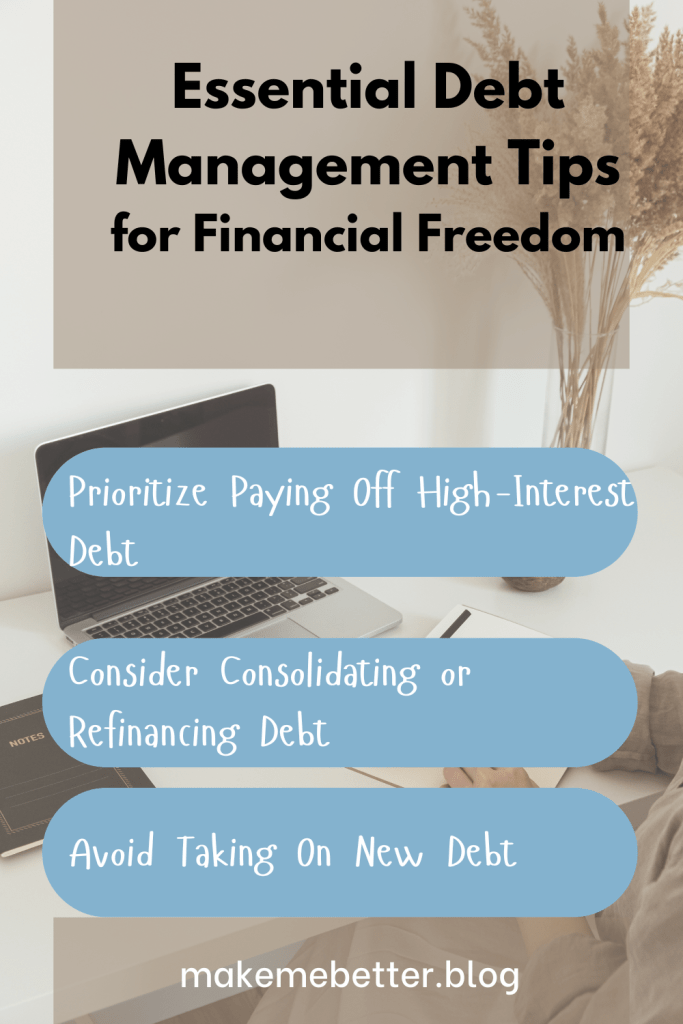
Managing debt effectively is crucial for maintaining financial health and achieving long-term goals. With high-interest debt, such as credit card debt, quickly accumulating and becoming overwhelming, it’s essential to have a clear plan in place. This article will guide you through prioritizing debt repayment, considering consolidation or refinancing options, and avoiding new debt unless absolutely necessary.
Prioritize Paying Off High-Interest Debt
High-interest debt, particularly from credit cards, can quickly spiral out of control due to compounding interest. Prioritizing the repayment of these debts is critical for several reasons:
1. Cost Savings: High-interest rates mean you pay more over time. By focusing on paying off these debts first, you reduce the total amount of interest paid, freeing up more money for savings or other financial goals.
2. Improved Credit Score: Reducing high-interest debt can positively impact your credit score. Lowering your credit utilization ratio (the amount of credit you’re using compared to your credit limit) boosts your score and improves your ability to secure better loan terms in the future.
3. Financial Peace of Mind: Eliminating high-interest debt reduces financial stress, allowing you to focus on other financial objectives without the burden of looming debt.
Action Plan:
- List all your debts along with their interest rates and balances.
- Prioritize paying off the debt with the highest interest rate first while making minimum payments on other debts.
- Once the highest-interest debt is paid off, move on to the next highest, and so on. This method is known as the avalanche method.

Consider Consolidating or Refinancing Debt
Debt consolidation and refinancing are effective strategies to lower your interest rates and simplify repayment.
1. Debt Consolidation: Debt consolidation involves combining multiple debts into a single loan with a lower interest rate. This can make it easier to manage your payments and reduce the total interest paid over time.
Benefits:
- Simplified payments: One monthly payment instead of several.
- Lower interest rates: Consolidation loans typically offer lower interest rates than credit cards.
Types:
- Personal loans: Unsecured loans from a bank or credit union that can be used to pay off high-interest debts.
- Balance transfer credit cards: Cards that offer low or 0% introductory interest rates on transferred balances for a specified period.
2. Refinancing: Refinancing involves taking out a new loan to pay off existing debt, usually with better terms and a lower interest rate.
Benefits:
- Reduced monthly payments: Lower interest rates can decrease your monthly obligations.
- Lower total interest paid: Over the life of the loan, you pay less in interest.
Action Plan:
- Research and compare consolidation and refinancing options.
- Calculate the total cost, including any fees associated with new loans.
- Apply for the option that best fits your financial situation and goals.
Avoid Taking On New Debt
One of the most effective ways to manage debt is to avoid taking on new debt unless absolutely necessary.
1. Assess Necessity: Before taking on new debt, carefully consider whether it is essential. For example, differentiate between wants and needs. If the purchase isn’t necessary, delay it until you can afford it without borrowing.
2. Create a Budget: Maintain a detailed budget to track your income and expenses. A budget helps identify areas where you can cut back and allocate more towards debt repayment.
3. Build an Emergency Fund: Having an emergency fund can prevent the need to rely on credit cards or loans for unexpected expenses. Aim to save at least three to six months’ worth of living expenses.
4. Use Credit Wisely: If you must use credit, ensure it’s for productive purposes (e.g., investing in education or a home). Avoid using credit for discretionary spending.
Action Plan:
- Establish a monthly budget and stick to it.
- Set up automatic transfers to build an emergency fund.
- Use credit cards sparingly and pay off the balance in full each month to avoid interest charges.
Conclusion
Effective debt management involves prioritizing high-interest debt repayment, considering consolidation or refinancing options, and avoiding new debt. By following these strategies, you can take control of your finances, reduce stress, and work towards financial freedom. Remember, the journey to becoming debt-free requires discipline, planning, and patience, but the rewards of financial stability and peace of mind are well worth the effort.
 Make Me Better Thrive
Leave a comment