Struggling to fall asleep can be frustrating, especially when you know how important rest is for your overall health. Here are ten tried-and-true methods to help you drift off more quickly and enjoy a restful night’s sleep.
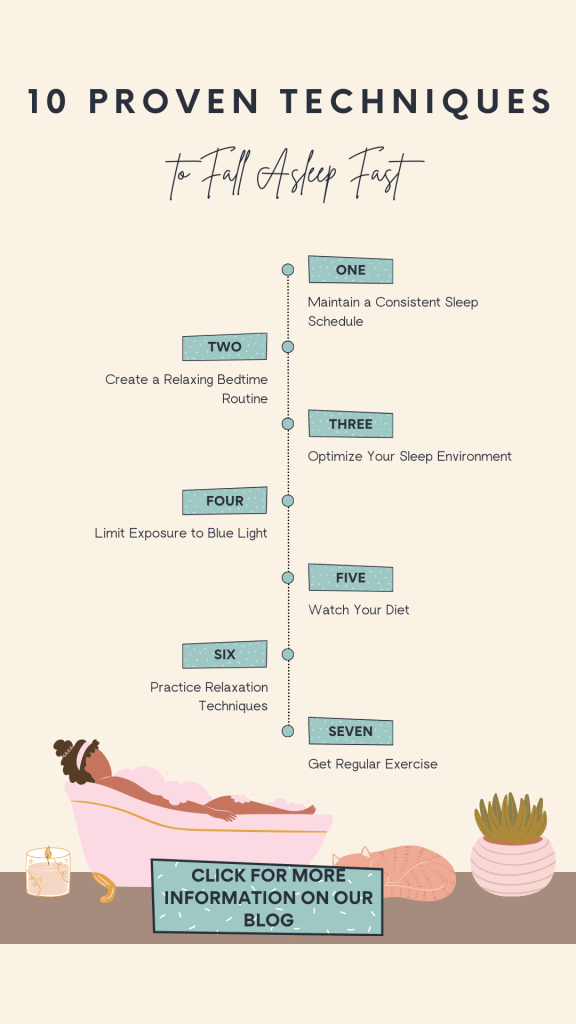
1. Maintain a Consistent Sleep Schedule
Our bodies thrive on routine. Going to bed and waking up at the same time every day—even on weekends—helps regulate your internal clock, making it easier to fall asleep and wake up naturally.
2. Create a Relaxing Bedtime Routine
A calming pre-sleep ritual can signal to your body that it’s time to wind down. Activities such as reading a book, taking a warm bath, or practicing gentle yoga can ease the transition from wakefulness to sleep.
3. Optimize Your Sleep Environment
Your bedroom should be a sanctuary for sleep. Ensure it’s cool, dark, and quiet. Consider using blackout curtains, earplugs, or a white noise machine to minimize disturbances. A comfortable mattress and pillows are also crucial for a good night’s sleep.
4. Limit Exposure to Blue Light
The blue light emitted by phones, tablets, and computers can interfere with your body’s production of melatonin, the hormone that regulates sleep. Try to avoid screens at least an hour before bedtime. If necessary, use blue light filters on your devices.
5. Watch Your Diet
What you eat and drink can significantly impact your ability to fall asleep. Avoid heavy meals, caffeine, and alcohol close to bedtime. Instead, opt for a light snack if you’re hungry. Foods rich in tryptophan, magnesium, and calcium, such as bananas, almonds, and yogurt, can promote sleep.
6. Practice Relaxation Techniques
Relaxation methods like deep breathing, progressive muscle relaxation, or meditation can calm your mind and prepare your body for sleep. Apps and online resources can guide you through these techniques if you’re new to them.
7. Get Regular Exercise
Physical activity during the day can help you fall asleep more easily at night. Aim for at least 30 minutes of moderate exercise, such as walking or swimming. However, try to finish any vigorous activity at least a few hours before bedtime to avoid overstimulation.
8. Manage Stress and Anxiety
Stress and anxiety are common culprits behind sleepless nights. Journaling your thoughts, talking to a friend, or seeking professional help can make a significant difference. Additionally, practicing mindfulness or using stress-relief techniques can improve your sleep quality.
9. Avoid Naps During the Day
While naps can be tempting, especially if you’re feeling particularly tired, they can interfere with your nighttime sleep. If you must nap, try to keep it short (20-30 minutes) and early in the afternoon.
10. Consider Natural Sleep Aids
Natural supplements like melatonin, valerian root, or chamomile tea can promote sleep without the side effects associated with prescription sleep medications. Always consult with a healthcare provider before starting any new supplement, especially if you’re taking other medications or have health conditions.
Falling asleep quickly often requires a combination of lifestyle changes and creating an environment conducive to rest. By implementing these strategies, you can improve your sleep hygiene and enjoy more restful nights. Sweet dreams!
Feel free to share these tips with your readers to help them achieve better sleep and overall well-being. If you have any additional suggestions or personal experiences with improving sleep, leave a comment below!
 Make Me Better Thrive
Leave a comment