Life is a series of stages, each with its own challenges and opportunities. Moving on from the past can be difficult, but it is essential for growth and happiness. Whether you’re recovering from a relationship, a job change, a loss, or any significant life event, the key to a fulfilling future lies in how you manage this transition. Here’s a guide on how to effectively move on to the next stage of your life.
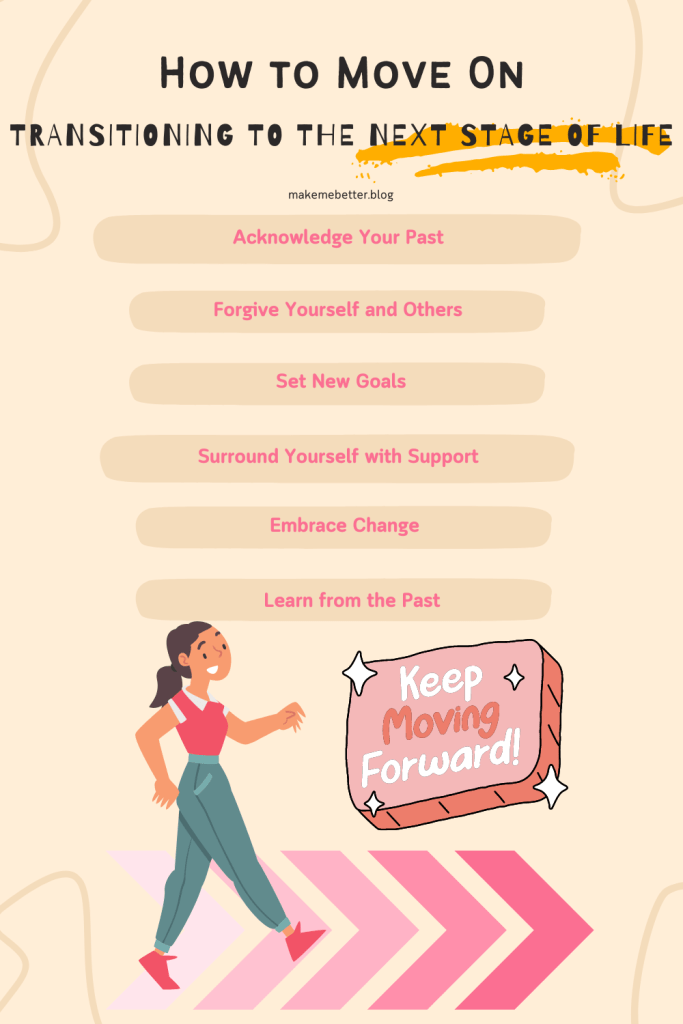
1. Acknowledge Your Past
- Reflect and Accept: Take time to reflect on your past experiences. Acknowledge the emotions and lessons learned. Acceptance is crucial; it allows you to process what happened without denial or avoidance.
- Write it Down: Journaling can be a powerful tool. Write about your experiences, feelings, and what you’ve learned. This helps in organizing your thoughts and gaining clarity.
2. Forgive Yourself and Others
- Self-Forgiveness: Understand that everyone makes mistakes. Forgive yourself for any perceived shortcomings or errors. Self-compassion is key to healing.
- Forgive Others: Holding on to grudges keeps you anchored to the past. Forgiving others, even if they haven’t apologized, frees you from bitterness and resentment.
3. Set New Goals
- Define Your Future: Think about what you want to achieve in the next stage of your life. Set clear, attainable goals that excite and motivate you.
- Create an Action Plan: Break down your goals into smaller, manageable steps. This makes them less overwhelming and more achievable.
4. Surround Yourself with Support
- Seek Positive Relationships: Build a support network of friends, family, or mentors who encourage and uplift you.
- Professional Help: Sometimes, talking to a therapist or counselor can provide valuable insights and coping strategies.
5. Practice Self-Care
- Physical Health: Exercise regularly, eat a balanced diet, and get adequate sleep. Physical well-being significantly impacts your emotional state.
- Mental Health: Engage in activities that reduce stress and promote mental wellness, such as meditation, hobbies, or spending time in nature.
6. Embrace Change
- Be Open to New Experiences: Embrace the opportunities that come with change. Try new activities, meet new people, and explore new interests.
- Adaptability: Cultivate flexibility and adaptability. Change can be uncomfortable, but it often leads to personal growth and new opportunities.
7. Learn from the Past
- Identify Lessons: Look at your past objectively to identify valuable lessons. Understanding what you’ve learned can prevent you from repeating the same mistakes.
- Apply the Lessons: Use these insights to make informed decisions in your current and future endeavors.
8. Let Go of What You Can’t Control
- Focus on the Present: Concentrate on what you can influence now. Let go of past events that you cannot change.
- Mindfulness Practices: Techniques such as mindfulness and meditation can help you stay grounded in the present moment.
9. Celebrate Progress
- Acknowledge Milestones: Recognize and celebrate your progress, no matter how small. Each step forward is a victory.
- Positive Reinforcement: Reward yourself for reaching your goals. Positive reinforcement boosts motivation and morale.
10. Stay Patient and Persistent
- Be Patient: Moving on is a process that takes time. Be patient with yourself and understand that healing is not linear.
- Persistence: Stay committed to your goals and keep pushing forward, even when progress seems slow.
Moving on to the next stage of life from the past is a journey that requires effort, patience, and resilience. By acknowledging your past, setting new goals, surrounding yourself with support, practicing self-care, and embracing change, you can transition smoothly and create a fulfilling future. Remember, every step you take is a step towards a brighter, more rewarding life.
 Make Me Better Thrive
Leave a comment