Eating healthy doesn’t have to be expensive. With careful planning and smart shopping, you can enjoy nutritious meals that are budget-friendly. Here’s a guide to budgeting for healthy recipes and making the most of your grocery budget.

1. Plan Your Meals
Start by planning your meals for the week ahead. Look for recipes that use affordable, seasonal ingredients and ingredients you already have on hand. Consider batch cooking to save time and money.
2. Focus on Staple Ingredients
Build your meals around affordable staple ingredients such as beans, lentils, rice, pasta, oats, and potatoes. These items are versatile, nutritious, and can be bought in bulk for additional savings.
3. Shop Seasonally and Locally
Seasonal fruits and vegetables are often cheaper and taste better. Visit farmers’ markets or local produce stands for fresh, budget-friendly options. Frozen fruits and vegetables are also a cost-effective alternative and retain their nutritional value.
4. Opt for Plant-Based Proteins
Incorporate plant-based proteins like beans, lentils, tofu, and chickpeas into your meals. They are inexpensive sources of protein and can be used in various dishes such as soups, salads, and stir-fries.
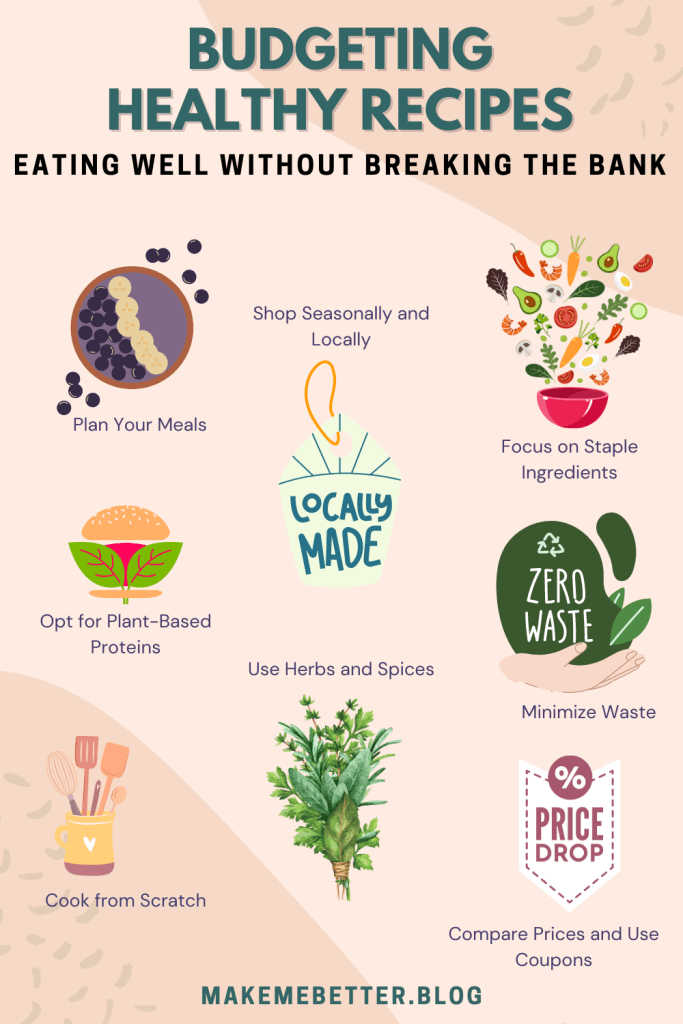
5. Minimize Waste
Reduce food waste by using leftovers creatively and storing ingredients properly. Plan meals that use similar ingredients to avoid buying items that might go to waste.
6. Cook from Scratch
Prepare meals from scratch whenever possible. Pre-packaged and processed foods tend to be more expensive and often contain added sugars and preservatives. Cooking at home allows you to control the ingredients and portion sizes.
7. Use Herbs and Spices
Enhance the flavor of your meals without adding extra cost by using herbs, spices, and citrus fruits. They can transform simple dishes and reduce the need for added salt and fats.
8. Compare Prices and Use Coupons
Take advantage of sales, discounts, and coupons when shopping for groceries. Compare prices between different brands and consider buying store brands, which are often cheaper without compromising quality.
9. Prepare Budget-Friendly Snacks
Avoid expensive pre-packaged snacks by preparing your own budget-friendly options such as homemade granola bars, yogurt parfaits, or vegetable sticks with hummus.
10. Balance Nutrients
Ensure your meals are balanced with carbohydrates, proteins, healthy fats, vitamins, and minerals. This not only supports your overall health but also keeps you satisfied and reduces cravings for unhealthy snacks.
11. Plan for Leftovers
Intentionally cook extra portions to enjoy as leftovers for lunch or dinner the next day. This saves time and money while ensuring you have nutritious meals readily available.
12. Stay Hydrated
Drink plenty of water throughout the day. It’s essential for overall health and can help curb unnecessary cravings for snacks.
Budgeting for healthy recipes is about making smart choices and prioritizing nutritious, affordable ingredients. By planning meals, shopping strategically, and cooking at home, you can enjoy a balanced diet without overspending. Incorporate these tips into your meal planning and start reaping the benefits of eating well on a budget. Remember, eating healthy doesn’t have to be costly—it’s all about making informed decisions and finding creative ways to nourish your body without breaking the bank.
 Make Me Better Thrive
Leave a comment