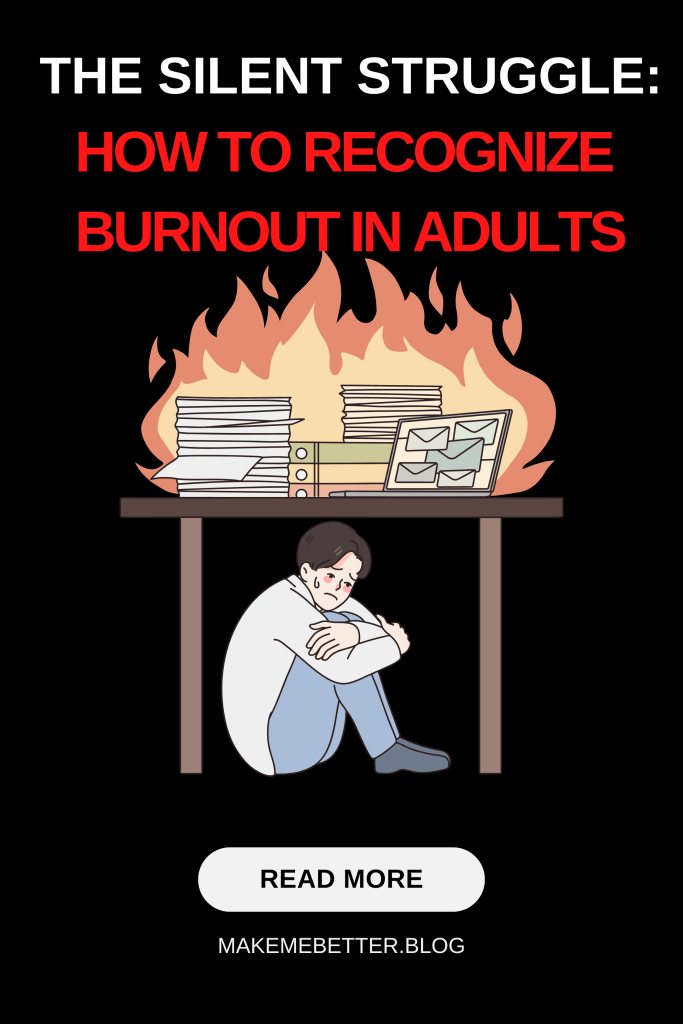
In today’s fast-paced world, burnout has become an all-too-common experience, yet it often flies under the radar. You might brush off constant fatigue, irritability, or a lack of enthusiasm as just part of adulting. But what if these are signs of something more serious? Recognizing burnout is crucial for reclaiming your well-being, so let’s dive into what it is and how to spot it before it takes a toll.
What Is Burnout?
Burnout isn’t just about feeling tired after a long week—it’s a state of chronic physical and emotional exhaustion often brought on by prolonged stress. Whether it’s work, personal life, or a mix of both, when the demands keep piling up and your energy reserves are running on empty, burnout can set in. It’s like your body and mind are waving a white flag, but you’re too busy to notice.
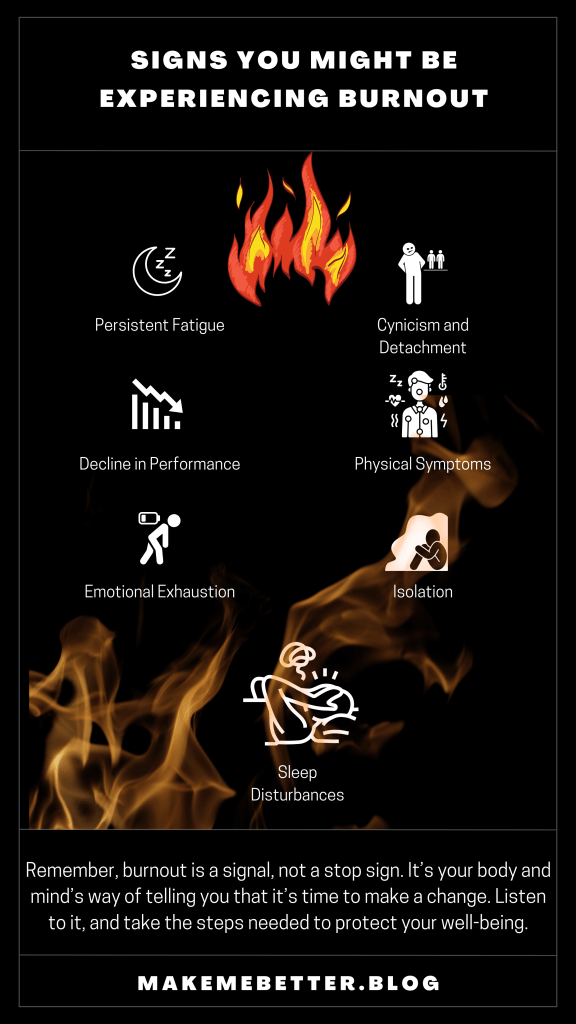
Signs You Might Be Experiencing Burnout
- Persistent Fatigue: We all get tired, but burnout fatigue is different. It’s the kind that doesn’t go away after a good night’s sleep or a weekend off. You wake up feeling just as tired as when you went to bed, and no amount of coffee seems to help.
- Cynicism and Detachment: If you’re feeling increasingly negative or detached from your work or personal life, this could be a sign of burnout. You might catch yourself thinking, “What’s the point?” or “Why bother?” more often than not. This can lead to a lack of motivation and a sense of disillusionment with things you once cared about.
- Decline in Performance: Burnout can creep into your work or daily tasks, making it hard to concentrate, meet deadlines, or complete simple chores. You might find yourself procrastinating more, missing appointments, or just struggling to keep up with the basics.
- Physical Symptoms: Your body often knows something’s wrong before your mind catches up. Frequent headaches, stomach issues, or even heart palpitations can be physical manifestations of burnout. If you’re dealing with these symptoms more regularly, it’s worth considering burnout as a possible cause.
- Emotional Exhaustion: This goes beyond just feeling tired—it’s a deep-seated emotional drain where you feel overwhelmed and unable to cope. Small tasks can seem insurmountable, and you might find yourself more prone to tears or irritability.
- Isolation: Burnout often leads to social withdrawal. You might avoid friends, cancel plans, or find it increasingly difficult to connect with others. It’s as if you’re putting up walls to protect what little energy you have left.
- Sleep Disturbances: Despite feeling exhausted, you might find it hard to fall asleep or stay asleep. Alternatively, you might be sleeping more than usual but still wake up feeling unrefreshed. Burnout can seriously disrupt your sleep patterns, making it harder to recover.
What to Do if You Recognize These Signs
If any of these signs resonate with you, it’s important to take them seriously. Burnout isn’t something that will just go away on its own—it requires active steps to manage. Here’s what you can do:
- Acknowledge the Problem: The first step is recognizing that you’re burnt out. It’s not a sign of weakness; it’s a signal that you’ve been pushing too hard for too long.
- Reach Out for Support: Whether it’s talking to a friend, a family member, or a mental health professional, don’t go through this alone. Sharing your struggles can provide relief and help you gain perspective.
- Prioritize Self-Care: Make time for activities that rejuvenate you, whether it’s a hobby, exercise, or just some quiet time. Self-care isn’t a luxury; it’s a necessity when dealing with burnout.
- Set Boundaries: Learn to say no. It’s okay to put yourself first and set limits on what you can handle, both at work and in your personal life.
- Consider Professional Help: If burnout is severely impacting your life, consider seeking help from a therapist or counselor. They can provide strategies to cope and recover.
Moving Forward
Recognizing burnout is the first step towards reclaiming your life and well-being. It’s a silent struggle, but you don’t have to fight it alone. By paying attention to the signs and taking action, you can begin to heal and find balance again.
Remember, burnout is a signal, not a stop sign. It’s your body and mind’s way of telling you that it’s time to make a change. Listen to it, and take the steps needed to protect your well-being.
 Make Me Better Thrive
Leave a comment